
https://www.fmdnqi.com/the-evolution-of-dell-from-pc-pioneer-to-global-it-architect/
Dell Technologies’ business story has always revolved around the efficiency and scale of hardware. However, in the current tech landscape, corporate IT budgets are shifting from purchasing physical servers and storage to purchasing services and capabilities —namely, cloud computing and artificial intelligence (AI).
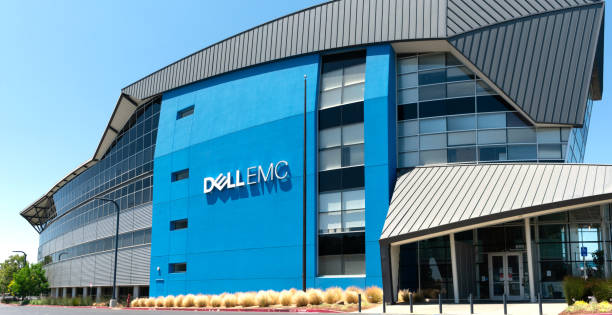
For a company once known for its direct sales model and PC hardware, this is a life-or-death transformation. Michael Dell completed his first major transformation through the massive acquisition of EMC and its VMware subsidiary, transforming it from a PC maker into an enterprise IT giant.
Dell now faces a second, even more critical transformation: evolving from a hardware vendor to a solutions provider and IT architect for its customers’ digital journeys . This article will delve into how Dell Technologies, riding the wave of cloud computing and AI, leverages its unique hybrid cloud strategy and infrastructure advantages to solidify its strategic positioning in this new era.
1. Cloud Computing Strategy: Connecting from Private Cloud to Multi-Cloud
Dell clearly recognizes that the future lies not in a single public cloud, but in the flexible linkage between the enterprise’s internal data center and the external public cloud – that is, the hybrid cloud.
1. Core Positioning: The Preferred Integrator of Hybrid Cloud
Real pain points: Most companies, especially those in regulated industries like finance and healthcare, have large amounts of data and applications that must be retained in local data centers (private clouds). At the same time, they require the flexibility and elasticity of public clouds.
Dell’s role as a bridge: Dell Technologies’ core value lies in providing Dell Technologies Cloud solutions, which deeply integrate its powerful hardware foundation (PowerEdge, PowerScale) with VMware’s software-defined technologies (such as VCF and VMware Cloud Foundation).
The value of consistency: Dell helps customers achieve a unified IT infrastructure and operating model across on-premises, edge, and major public clouds. This eliminates the need to learn multiple management tools, simplifies operational complexity, improves agility, and serves as a “universal adapter” connecting diverse cloud ecosystems.
2. Cloud-based business model: APEX “as a Service”

To align its business model with cloud computing, Dell launched the APEX product portfolio.
From capital expenditure to operating expenditure: APEX delivers Dell’s infrastructure (servers, storage, and networking) to customers on an as-a-service basis. Enterprises no longer need to make a large one-time capital expenditure (CAPEX) to purchase hardware, but instead pay on demand (OPEX) like using a cloud service.
Benchmarking against public cloud: This strategy directly targets the consumption model of public cloud, eliminating the concerns of enterprises about flexibility and cost forecasting when choosing local deployment, and enabling local IT assets to have the elasticity of the cloud.
2. Focus in the AI Era: Enabling Infrastructure and Edge Computing
The explosion of AI has created exponential demand for computing power, data storage, and network bandwidth. Dell’s strategic positioning is to provide the most reliable and easy-to-deploy AI infrastructure, becoming an “arms dealer” in the AI field.
1. The Arsenal of Data and Computing
AI full lifecycle support: Dell provides end-to-end AI infrastructure from data collection, storage, model training to inference deployment. This includes:
High-Performance Computing (HPC): High-density servers and GPU accelerators optimized for complex model training (closely collaborating with NVIDIA and others).
AI storage: Storage systems with large-scale data throughput capabilities (such as PowerScale) can solve the most common data I/O bottlenecks in AI model training.
Solution packaging: Dell has collaborated with ecosystem partners to launch “AI Ready Solutions,” which pre-integrate and test complex software and hardware configurations. Customers only need to deploy and run them, greatly reducing the entry threshold and implementation risks of AI projects.
2. Seize the high ground of edge AI
Edge data explosion: As Internet of Things (IoT) devices proliferate, data is increasingly generated at the “edge” (such as retail stores, factories, and hospitals), far away from core data centers.
Strategic significance: Dell deploys computing and AI reasoning capabilities at these edge locations (Edge AI), allowing enterprises to quickly process data and make real-time decisions, avoiding the delays and costs of transmitting all data back to the cloud.
3. AI PC: Reshaping the Client Experience
Dell did not abandon its traditional PC business, but upgraded it to AI PC.
Local AI Experience: By integrating a dedicated Neural Processing Unit (NPU) into the PC, Dell is offloading lightweight AI tasks (such as noise reduction for video conferences, real-time translation, and local Copilot functionality) to the device, reducing the burden on cloud computing and improving speed and privacy. This represents an innovative path to high-value growth in the client market.
Conclusion: Dell Technologies’ “Resilience” Philosophy
Dell’s transformation story is a textbook example of corporate resilience and strategic foresight. It successfully leveraged its roots in the enterprise hardware market, acquired core software capabilities (VMware) for the cloud computing era through mergers and acquisitions, and then cloudified its business model through APEX.
Today, Dell is no longer a traditional hardware vendor that simply sells boxes. Instead, it is an integrator of hybrid cloud architectures and an accelerator of AI infrastructure. Its strategic positioning is clear: to become the most trusted IT architect for enterprises in the complex multi-cloud and explosive AI era, providing flexible, reliable, and on-demand IT capabilities.
In your opinion, is Dell Technologies’ biggest competitive advantage in cloud computing and AI its control and integration capabilities with VMware, or its efficiency in enterprise-level hardware and supply chain?
https://www.fmdnqi.com/the-evolution-of-dell-from-pc-pioneer-to-global-it-architect/