

https://www.fmdnqi.com/the-evolution-of-dell-from-pc-pioneer-to-global-it-architect/
On March 22, 2006, Dell officially announced the acquisition of Alienware, a deal that completely changed the landscape of the high-end gaming PC market. This acquisition was not only a combination of two hardware giants, but also a collision of gaming culture and enterprise computing concepts. Let’s review the ins and outs of this acquisition and how it reshaped the entire industry.
Why did Dell acquire Alienware?
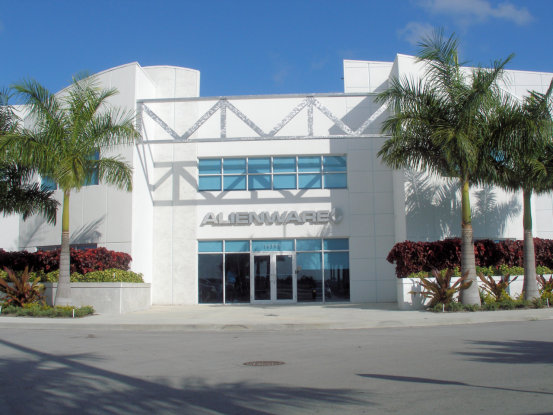
In the early 2000s, Alienware became a brand of faith in the hearts of hardcore gamers with its cool design, extreme performance and distinctive gaming culture. However, as an independent company, Alienware faced challenges in production capacity, supply chain and global sales channels.
At the same time, Dell, as a global PC giant, has a dominant position in the commercial and consumer markets, but lacks presence in the field of high-performance gaming PCs. By acquiring Alienware, Dell can:
quickly enter the high-end gaming market and avoid building a new brand from scratch ;
leverage Alienware’s fan effect to enhance Dell’s influence among the gaming community;
integrate the supply chain and production system to reduce Alienware’s costs and increase profit margins
Post-acquisition changes: Alienware becomes more powerful, but also loses some of its uniqueness
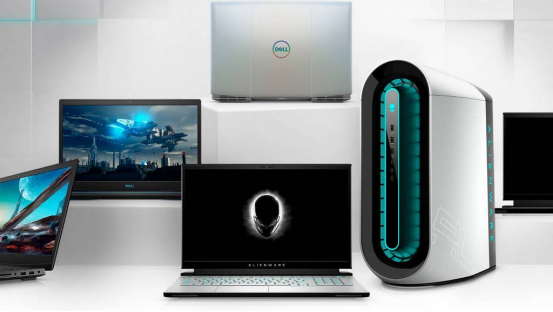
Positive impact:
Global expansion
With the help of Dell’s global supply chain and sales network, Alienware products quickly entered more markets, including Asia and Europe.
After-sales service has also been improved, and players can enjoy more convenient repairs and support worldwide.
Technology Integration
Alienware began to adopt Dell’s cooling technology (such as Cryo-Tech) and motherboard design to improve stability and performance.
Some models (such as the Alienware m15/m17) share some components with the Dell XPS series, reducing costs but maintaining a high-end positioning.
Product line enrichment
From traditional gaming laptops to monitors (AW3423DW QD-OLED), keyboard and mouse peripherals, and even gaming chairs, a complete ecosystem is formed.
Controversy and Challenges:
Design Convergence
In the early days, Alienware was known for its exaggerated mecha style, but in recent years its designs have become more conservative, and some old players believe that it has “lost its soul.”
Some models (such as Alienware x14) sacrificed upgradeability for the sake of lightness and thinness, causing dissatisfaction among core users.
Prices continue to rise
High-end models (such as the m18 R2 equipped with RTX 4090) cost more than $4,000 and are jokingly called the “faith tax.”
In comparison, competing products such as ROG and Razer are often more cost-effective with the same configuration.
Synergy and conflict with Dell’s main brand
Dell once tried to launch the “Dell G series” gaming laptop, which was positioned lower than Alienware, but the market response was mediocre, resulting in the dispersion of resources.
Impact on the gaming PC industry
Promote the popularization of the concept of “e-sports notebook”
Alienware’s success has prompted brands such as ASUS (ROG), MSI (MSI), and HP (OMEN) to accelerate their layout in the high-end gaming laptop market.
Improvement of industry standards
High refresh rate screens, mechanical keyboards, RGB lighting effects and other features that were originally part of Alienware have now become standard for gaming laptops.
Business model innovation
Alienware was the first to try “limited edition” marketing (such as the lunar edition Area-51m), which was followed by later competitors.
Alienware in 2024: Still the king of gaming PCs?
Today, Alienware is still the representative of high-end gaming equipment, but it faces more intense competition:
Advantages : Brand premium, Dell after-sales support, innovative technology (such as QD-OLED screen)
Challenges : Competitive price/performance ratio (such as Lenovo Legion), players’ nostalgia for “niche boutiques”
Dell’s acquisition has brought Alienware economies of scale, but it has also transformed it from a “geek toy” to a “mass luxury product.” In the future, it needs to find a better balance between commercialization and the demands of hardcore gamers.
Conclusion:
This acquisition in 2006 allowed Alienware to survive, but it also changed its DNA. Is this a good thing or a bad thing for gamers? Perhaps the answer depends on whether you value “sentiment” or “performance” more. In any case, Alienware’s story proves one thing: in the PC industry, only by constantly evolving can you survive.
https://www.fmdnqi.com/the-evolution-of-dell-from-pc-pioneer-to-global-it-architect/