
https://www.fmdnqi.com/the-evolution-of-dell-from-pc-pioneer-to-global-it-architect/
A legend of the personal computer era, Michael Dell’s entrepreneurial story and business strategies are a textbook example of modern business history. Dell’s development has undergone an epic transformation, from its humble beginnings in a university dorm room, to dominance through its disruptive direct sales model, to its decline, and finally to its second rise through a series of bold privatizations and massive mergers and acquisitions .
This article will deeply analyze Michael Dell’s core business philosophy and how Dell completed the transformation from a “PC manufacturer” to an “end-to-end IT solutions giant” in the wave of digital transformation.
Disruption and Innovation: The Golden Age of Direct Selling
When Michael Dell founded his company in a University of Texas dorm room in 1984, eliminating middlemen and returning control to consumers was central to his business philosophy.
1. Core Philosophy: Direct-to-Customer Model
Customization and Efficiency: Traditional PC manufacturers sell standardized inventory products through retailers. Dell’s direct sales model allows customers to customize their computer configurations online or by phone, and the company produces to order.
Cost advantage: This model avoids the layers of markups imposed by distributors and retailers, significantly reduces the risk and cost of inventory overstock, and enables Dell to provide customized products at more competitive prices.
“Information is power”: Through direct sales, Dell gained valuable data on customer needs and market trends, making its supply chain and production planning more flexible and precise than its competitors. This advantage helped Dell become one of the world’s largest PC manufacturers by the end of the 20th century.
2. Limitations of the direct sales model
However, as the PC industry matured and consumer purchasing habits changed, the advantages of the direct sales model gradually weakened:
Standardization and price wars: PCs gradually became standardized commodities, and consumers began to prefer buying ready-made, low-priced models in retail stores, and the demand for customization decreased.
Market coverage: The direct sales model has difficulty covering emerging retail markets that require physical experience and immediate purchase.
The core of the second rise: a bold reshaping of business philosophy
When the direct sales model ceased to be a panacea, Dell’s growth stalled. Michael Dell realized that survival required a painful strategic shift. His philosophy shifted from “eliminating the middleman” to “becoming a single integrator for all of a customer’s IT needs .”
1. Privatization: Gaining Free Space for Transformation
In 2013, amid a slump in the PC business and pressure from activist investor Carl Icahn, Michael Dell decided to take the company private.
Strategic significance: This was one of Michael Dell’s most daring decisions. He believed that the focus of a public company on short-term financial performance prevented the company from making painful but necessary long-term strategic investments (such as the shift to enterprise-class IT services).
Core concept: Privatization provides Dell with a several-year “rest and recuperation” period, allowing it to focus on building a new enterprise-class technology portfolio without being disturbed by the pressure of quarterly financial reports and prepare for subsequent large-scale mergers and acquisitions.
2. Giant M&A: The largest tech deal in history
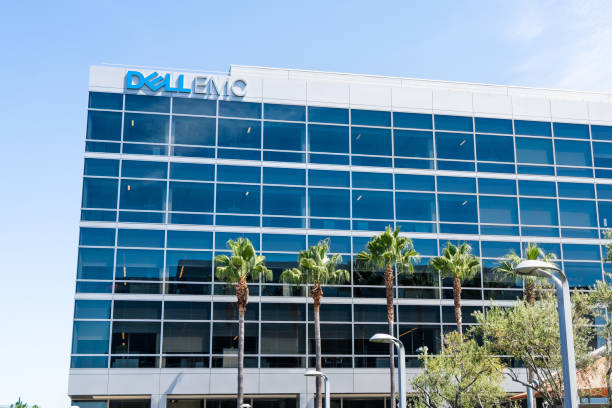
In 2016, Dell completed its acquisition of storage giant EMC for approximately $67 billion, which is considered the largest technology merger and acquisition in IT history.
Strategic Motivation: Dell’s goal is to completely transform into an end-to-end IT solutions provider.
Make up for the shortcomings: The acquisition of EMC and its VMware (virtualization technology) has made up for Dell’s shortcomings in high-profit areas such as enterprise storage, cloud computing and software-defined data centers.
Seize the market: The transformed Dell Technologies can provide one-stop solutions from personal computers, servers, storage to virtualization and cloud computing, competing directly with enterprise-level IT giants such as IBM and HPE, and seizing the IT market with a total value of up to US$2 trillion.
Philosophy: This acquisition reflects Michael Dell’s tenacious spirit of “Play Nice But Win” and his determination to take huge leverage risks.
Dell’s Second Rise: From Hardware to Hybrid Cloud
Through privatization and the acquisition of EMC, Dell successfully completed its enterprise-level “digital transformation” and returned to the center stage among technology giants.
1. “Full-stack” service providers
Today, Dell Technologies is no longer just a PC company, but a comprehensive enterprise that can provide a full range of solutions covering “from edge to core to cloud” (Edge-Core-Cloud).
2. Agility and customer focus
Despite the company’s massive size, Michael Dell remained committed to his original philosophy of “customer focus.” Using the “Agile” methodology, the company collected extensive customer feedback and rapidly iterated solutions in small steps to adapt to the accelerated demands of enterprise digital transformation.
Summary: A leader’s battle for survival
Michael Dell’s business career is a vivid lesson in the principle of “you can’t survive without change.” He found his first wave of success with a disruptive direct sales model, and then, in a moment of crisis, upgraded his strategy through privatization and historic mergers and acquisitions. His story demonstrates that in a rapidly evolving industry, the core task of a leader isn’t to maintain existing advantages, but to possess the courage and vision to disrupt themselves and fight for the future.
Do you think that in the face of future changes in AI and quantum computing, Michael Dell and Dell Technologies can once again consolidate their leadership in next-generation IT architecture through a large-scale strategic action?
https://www.fmdnqi.com/the-evolution-of-dell-from-pc-pioneer-to-global-it-architect/